Why Your Activewear Smells Fine Wet and Awful the Moment It Dries
Quick Answer: Odor compounds bind to the oil residues trapped inside synthetic fibers. When the garment is wet, water dilutes and holds those compounds; as it dries they concentrate and volatilize, which is when your nose finds them. The fix is removing the oil, not masking the smell — a cold wash with an enzyme or sport-specific detergent, no fabric softener, and a periodic vinegar soak.
It comes out of the wash smelling clean. Twenty minutes into a workout, or sometimes just after it has hung dry, the smell is back. That is not your imagination and it is not a failed wash.
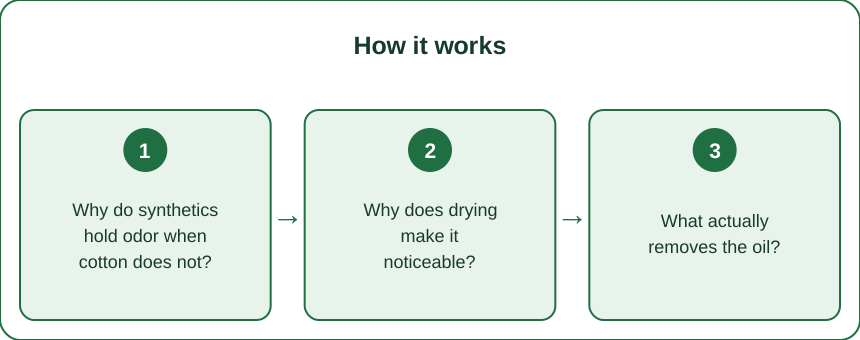
Why do synthetics hold odor when cotton does not?
It comes down to how each fiber interacts with oil. Polyester and nylon are oleophilic — they attract and bind oil molecules — and hydrophobic, meaning they repel water.
Your sweat itself is nearly odorless. The smell comes from bacteria metabolizing the oils and proteins in sweat, producing volatile compounds. Those oils soak into synthetic fibers and stay there, because the water-based wash cycle that removes them from cotton cannot reach them in polyester.
So a normal wash cleans the surface and leaves the oil reservoir intact. The bacteria that feed on it repopulate quickly, and the cycle repeats. This is why a shirt can seem clean and then smell within minutes of body heat.
Why does drying make it noticeable?
Volatility. Odor compounds have to become airborne for you to smell them, and water suppresses that in two ways — it dilutes the concentration at the surface, and evaporating water carries heat away, keeping the fabric cooler.
As the garment dries, the compounds concentrate in a smaller volume of residue and the fabric warms to room temperature. Both effects push more molecules into the air.
Body heat does the same thing, which is why a clean-smelling shirt turns within ten minutes of putting it on. The compounds were present at the start; your body simply supplied the temperature that released them.
What actually removes the oil?
Three things, and they work best together.
Enzyme detergent is the first. Lipases break down fats and oils, proteases break down proteins. A standard detergent relies mostly on surfactants, which struggle inside a hydrophobic fiber. Sport-specific detergents are largely enzyme formulations sold under a different name.
A pre-soak is the second and it is the step most people skip. Thirty minutes in cold water with detergent before the cycle starts does more than doubling the detergent in a normal wash, because time is what lets enzymes work.
White vinegar is the third, used periodically rather than every wash. A cup in the wash with no detergent, run alone, strips accumulated residue. Do not combine it with detergent in the same cycle — you neutralize both.
And the negative rule that matters most: no fabric softener, ever. Softener works by depositing a waxy coating, which seals oil into the fiber and destroys moisture-wicking at the same time.
What Nobody Tells You About the Washing Machine Itself
A front-loading machine with a rubber door gasket is often the actual source of the smell people blame on their clothes. Water sits in the gasket fold, biofilm develops, and every load picks up a little of it.
Wipe the gasket dry after the last load of the day and leave the door ajar. This one habit resolves a surprising share of persistent activewear odor complaints.
The second thing nobody mentions: overloading. Synthetics need mechanical agitation and water volume to release residue, and a packed drum provides neither. A half-full load of activewear cleans dramatically better than a full one, which is annoying but true.
Third, the detergent drawer. Residue builds there and goes rancid, especially with liquid detergent. Pull it out and rinse it monthly.
And the one that surprises everyone: leaving wet workout clothes in a gym bag for six hours does more damage than the workout did. Bacterial populations grow exponentially in warm damp fabric, and a garment that sat overnight may need a vinegar soak rather than a normal wash to recover.
What does a working routine look like?
Turn garments inside out — the odor lives on the side that touched your skin.
Rinse or hang to dry as soon as possible after training. Even 20 minutes of air rather than a sealed bag makes a measurable difference.
Wash cold, on a normal cycle, with an enzyme detergent and no softener. Hot water sets protein stains and degrades elastane, so it is the wrong tool in both directions.
Air dry. The dryer’s heat is the single fastest way to destroy the elastic recovery in leggings and sports bras, and it also bakes any remaining residue in.
Run a vinegar-only cycle on the whole batch every month or so, and clean the machine gasket weekly. That is the entire system.
FAQ: Activewear Odor Questions, Answered
Does anti-odor treated fabric solve this?
Silver and other treatments reduce bacterial growth and help, but they diminish over washes and do not address oil already in the fiber. They delay the problem rather than removing it.
Is baking soda as good as vinegar?
They work differently — baking soda neutralizes acidic odors, vinegar dissolves alkaline residue and mineral build-up. Vinegar is generally more effective on synthetic activewear. Never mix them in the same load.
Can a garment be too far gone?
Yes. Once oil has been repeatedly heat-set in a dryer over months, a full recovery is unlikely. A long vinegar soak followed by an enzyme pre-soak is the best remaining attempt.
TL;DR:
- Odor compounds bind to oil trapped inside synthetic fibers, and drying concentrates and releases them.
- Enzyme detergent plus a 30-minute cold pre-soak removes what a normal wash cannot.
- Never use fabric softener, and never use the dryer if you want the garment to keep its stretch.
- Clean the machine gasket — it is often the real culprit.
None of this takes more than a few extra minutes a week, and it is the difference between activewear that lasts two years and activewear you quietly stop wearing after four months.
Keep Reading
This article is for general informational and styling purposes only. Fit, sizing, and product availability may vary.