Why Your Swimsuit Loses Its Shape So Much Faster Than Your Other Activewear
Quick Answer: Chlorine breaks down spandex fibers faster than regular sweat or detergent does, and leaving a suit to dry with chlorine and sunscreen residue still in the fabric accelerates that breakdown further. A rinse immediately after swimming, a gentle hand-wash rather than a machine cycle, and air-drying out of direct sun meaningfully extend a swimsuit’s life.
A swimsuit that looked fine three weeks ago is suddenly stretched out, faded, and losing its shape after every wear — much faster than a sports bra or leggings degrade under similar use. That’s not a coincidence; chlorine specifically targets the fiber that gives swimwear its stretch.
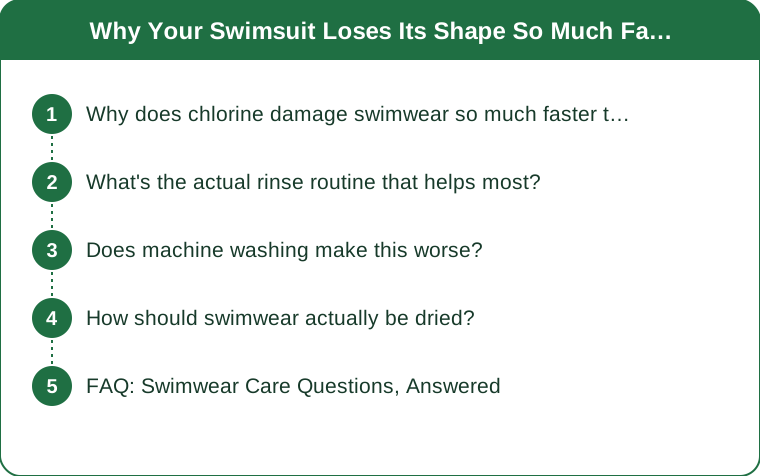
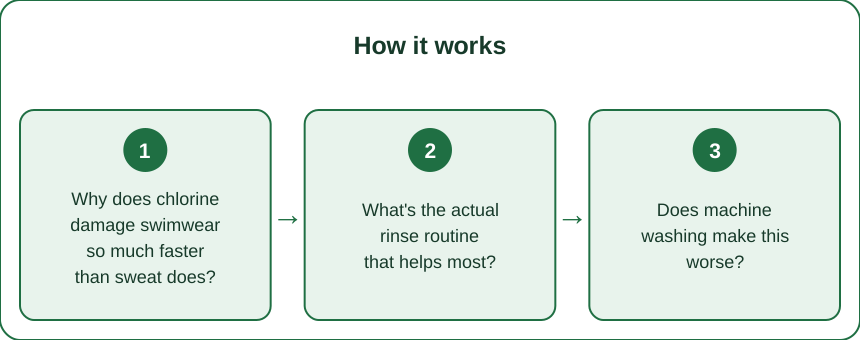
Why does chlorine damage swimwear so much faster than sweat does?
Chlorine breaks down the elastane (spandex) fibers that give swimsuits their stretch and recovery, through a chemical process that’s more aggressive than the mechanical wear from regular exercise sweat. Suits worn in chlorinated pools multiple times a week can show meaningful elasticity loss within a single season, even with otherwise careful handling.
What’s the actual rinse routine that helps most?
Rinse in cool water immediately after leaving the pool, ideally within 15-20 minutes rather than waiting until you’re home. Chlorine and sunscreen residue left sitting in wet fabric continues reacting with the fibers the longer it stays, so a fast rinse — even just at a pool-deck shower — meaningfully slows the damage.

Does machine washing make this worse?
Yes, generally — the combination of machine agitation and hot water accelerates elastane breakdown beyond what chlorine alone does. A gentle hand-wash in cool water with a mild detergent, followed by a gentle squeeze (never wring) to remove excess water, is noticeably gentler on the fibers than a machine cycle, even on a delicate setting.
How should swimwear actually be dried?
Air-dry flat or on a wide hanger, out of direct sunlight. UV exposure compounds the elastane breakdown chlorine has already started, and direct sun on a wet suit is one of the more overlooked causes of premature fading and stretch loss. A shaded spot indoors or under a covered patio dries suits just as effectively without the added UV damage.
FAQ: Swimwear Care Questions, Answered
Does a ‘chlorine-resistant’ fabric mean I can skip the rinse routine?
No — chlorine-resistant fabrics degrade more slowly, but they’re not immune, and skipping the rinse still shortens their lifespan meaningfully over a season.
How often should a regularly worn swimsuit be replaced?
For multiple weekly chlorine sessions, most suits show noticeable elasticity loss within 4-6 months without a careful care routine, longer with consistent rinsing and air-drying.
Does sunscreen residue matter as much as chlorine for fabric damage?
Yes — oil-based sunscreen residue left in fabric can cause its own kind of degradation and staining, which is part of why an immediate rinse matters even on days you’re not swimming laps.
TL;DR:
- Chlorine breaks down elastane fibers faster than regular sweat or detergent does
- Rinse in cool water within 15-20 minutes of leaving the pool
- Hand-wash gently instead of machine washing — agitation plus heat speeds up fiber breakdown
- Air-dry out of direct sunlight to avoid compounding UV damage on top of chlorine
A swimsuit’s short lifespan usually isn’t inevitable — it’s mostly a rinse-and-dry routine away from lasting a full season longer.
Keep Reading
This article is for general informational and styling purposes only. Fit, sizing, and product availability may vary.