Line Drying Outdoors Is Great for Fabric and Terrible for Colour
Quick Answer: Air drying protects elastane because it avoids heat, which is the main thing that destroys stretch recovery. But direct sunlight breaks down dyes, and synthetic activewear fades faster in sun than cotton does. Dry outdoors in shade, or indoors near airflow, and you get the fabric benefit without the colour cost. Shade, not sun. That is the whole adjustment.
Air drying is the right call.
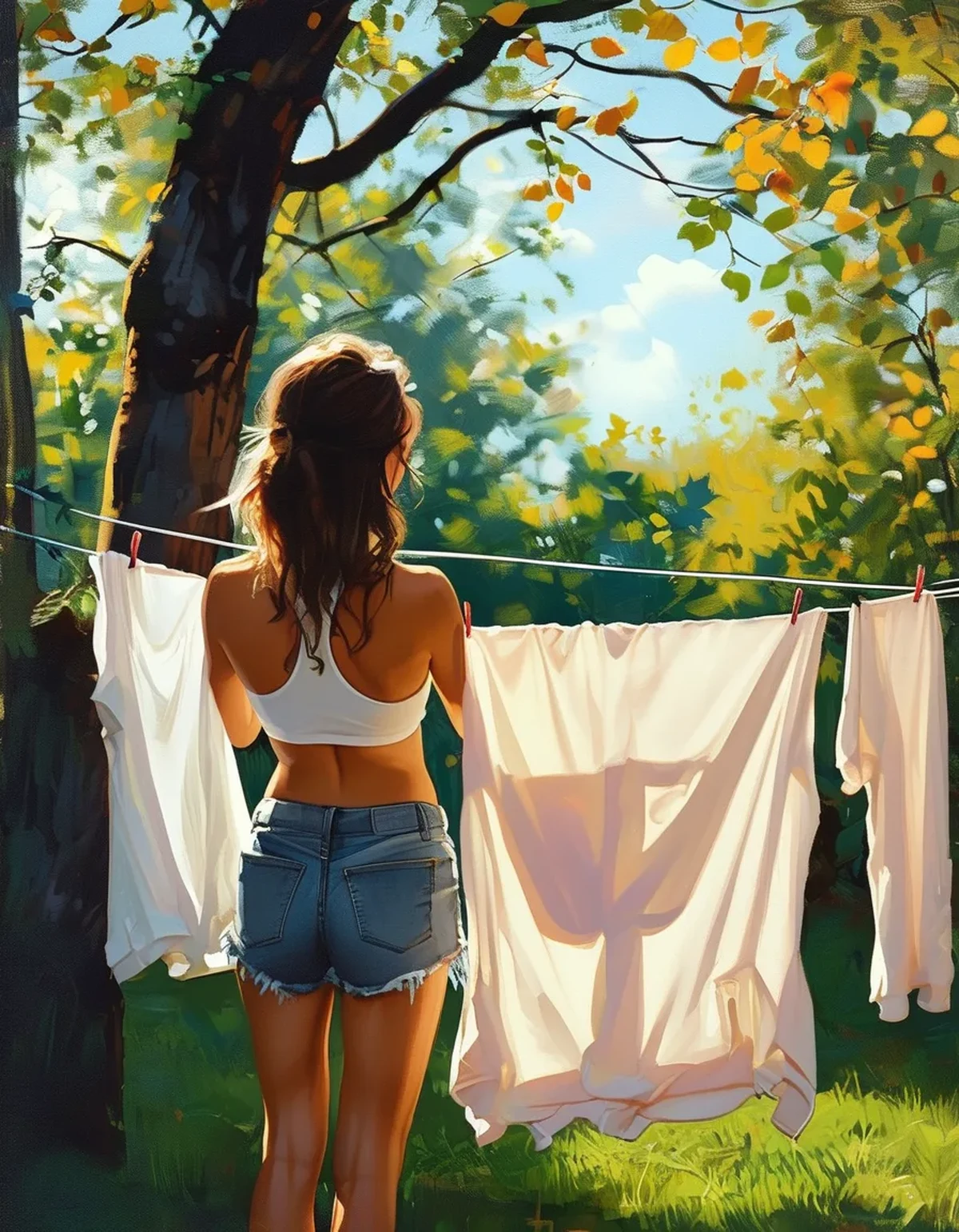
Hanging it in full afternoon sun undoes half the reason you did it.
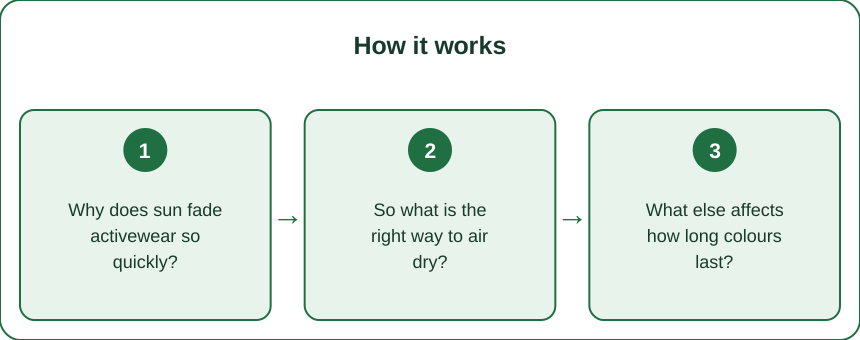
Why does sun fade activewear so quickly?
Because ultraviolet light attacks dye molecules directly, and synthetics have less to lose.
UV breaks down the chemical bonds in dyes. The effect is cumulative and irreversible - each hour of direct sun does a small amount of permanent damage. Fading is not dirt or wear, it is photochemistry.
Dark and vivid colours show it first. Deep navy, black, and bright saturated colours have the most dye to lose and the highest visible contrast when they lose it. A black legging fades visibly long before a grey one does.
Synthetics hold dye differently from cotton. Polyester and nylon are dyed with processes that generally resist washing well but can be vulnerable to prolonged UV, particularly on lighter-weight fabrics. Thin performance fabric fades faster than heavy cotton in the same conditions.
Late summer sun is still intense. People relax about sun exposure in September while UV remains substantial in the middle of the day. The autumn drying line is not as gentle as it feels - the air is cooler, the light is not much weaker.
Damp fabric may be more vulnerable. Wet fibres sit differently and the drying process concentrates any residual detergent, which can interact with light exposure. Sun plus damp plus detergent residue is the worst combination.
And the sun degrades elastane too. UV damages the elastic fibres themselves over time, not just the colour. You lose stretch and colour together, which is the argument against the sunny line rather than a preference about shades.
So what is the right way to air dry?
Shade, airflow, and attention to how it hangs.
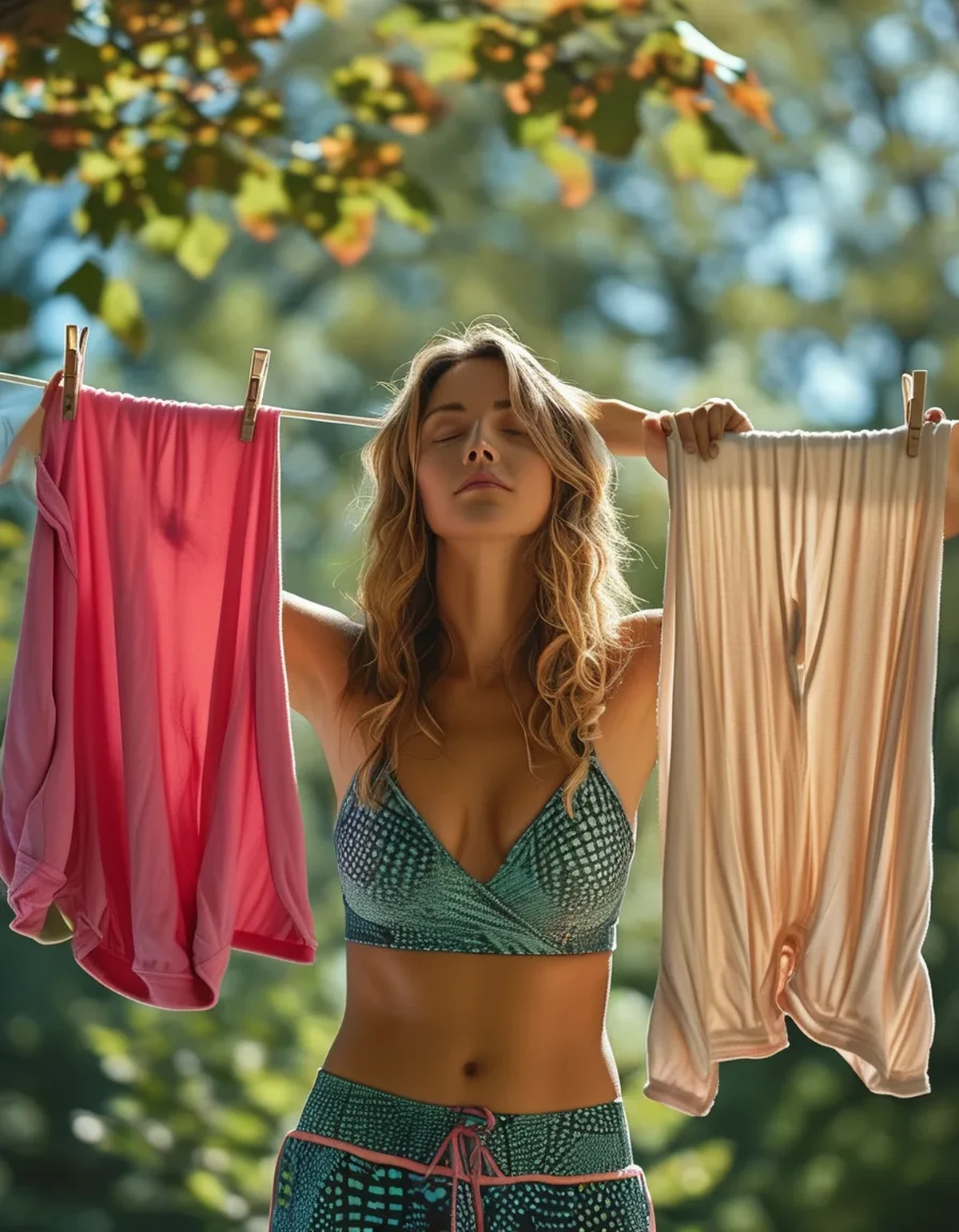
Hang in shade with good airflow. A shaded porch, under an awning, or the north side of a building dries nearly as fast as full sun through air movement alone. Airflow does more of the drying than direct sun does, which surprises people.
Turn garments inside out if sun is unavoidable. The outer face keeps its colour while the inside takes the exposure. A small step with a large effect on how a favourite pair looks after a season.
Dry flat where you can. Hanging heavy wet knitwear or thick leggings by the waistband stretches them under their own weight while wet. Flat drying on a rack preserves shape considerably better.
Do not hang by the straps. Sports bras and tank tops hung by thin straps distort exactly where the support matters. Over a rail or flat protects the structure.
Bring things in as soon as they are dry. Leaving a dry garment on the line for another five hours of sun is pure fading with no benefit. The damage is in the extra hours nobody counts.
And use indoor drying in autumn. As days shorten and humidity rises, outdoor drying gets slower while indoor drying with a fan or open window gets comparatively better. A rack near a fan is genuinely fast and has no UV at all.
What else affects how long colours last?
Several habits matter as much as the drying step.
Wash in cold water. Hot water accelerates dye loss and damages elastane simultaneously. Cold wash is the single most protective habit for coloured activewear.
Wash inside out. The outer surface takes less abrasion against the drum and other garments, and abrasion contributes to a faded, tired appearance. This costs nothing and is the most skipped step.
Do not overdose detergent. Excess detergent leaves residue that dulls colour and traps odour, and it does not clean better. Most people use considerably more than needed, especially with modern concentrated formulas.
Skip fabric softener entirely. It coats fibres, reduces moisture movement, and does nothing good for synthetic activewear. This is well established and still widely ignored.
Wash dark colours together and quickly after use. Sweat is mildly acidic and sitting in a damp bag for two days is harder on fabric and colour than the workout was. The gym bag is where garments actually die.
And accept that some fading is normal. Every wash removes a small amount of dye regardless of technique. The goal is slowing it, not stopping it, and the difference between careful and careless handling is measured in seasons.
Myth vs Fact: Drying and Fading Beliefs
Myth: sun is a natural way to freshen and disinfect clothes. Fact: sun does have some effect on odour, and it also permanently degrades dye and elastane. A shaded line with airflow achieves the freshening without the cost.
Myth: only cotton fades in the sun. Fact: synthetic activewear can fade faster than cotton, particularly in dark saturated colours on lightweight fabric. Thin technical fabric is more vulnerable, not less.
Myth: air drying takes far longer than a dryer. Fact: with decent airflow, most activewear dries very quickly because the fabrics are designed to move moisture. Performance fabric is the fastest thing to air dry you own.
Myth: a dryer on low is fine. Fact: low heat is better than high and still degrades elastane recovery over time. The waistband gives up first, which is exactly the part people complain about.
Myth: fading means the garment is worn out. Fact: colour and function fail separately, and a faded pair can perform perfectly. Faded is cosmetic unless the fabric has also thinned.
Myth: washing less protects colour. Fact: leaving sweat in fabric damages fibres and sets odour permanently, and the eventual heavy wash is harsher. Prompt gentle washing beats delayed vigorous washing.
FAQ: Air Drying Questions, Answered
Is indoor drying really as good?
With airflow, yes - and it has no UV exposure at all. A rack near an open window or a fan dries activewear quickly and is the better default from autumn onward.
Does turning clothes inside out actually help?
Meaningfully, for both fading and abrasion. The outer surface is the one you see, so protecting it is where the visible benefit is.
How long is too long in the sun?
There is no clean threshold, but the damage accumulates with every hour and there is no benefit after the garment is dry. Bring it in as soon as it is dry - that alone removes most of the avoidable exposure.
TL;DR:
- Air drying protects elastane because heat, not time, is what kills stretch recovery.
- Direct sun permanently degrades dye and elastic fibres - dark and vivid colours show it first.
- Dry in shade with airflow, or indoors near a fan; airflow does more of the work than sun does.
- Turn garments inside out, dry flat, and never hang by the straps.
- Cold wash, less detergent, no softener, and bring things in as soon as they are dry.
Move your drying rack out of the direct sun this week. Same drying time, and your darks will still be dark next spring.
See It in Motion
Seen here: High Waist Yoga Leggings with Side Pockets — shop it on bubblelime.com
Keep Reading
This article is for general informational and styling purposes only. Fit, sizing, and product availability may vary.