Why Activewear Loses Moisture-Wicking Ability From Detergent Residue, Not Just Sweat
Activewear that used to feel breathable and quick-drying but now feels clammy and slow to dry usually hasn’t actually degraded from wear — it’s frequently coated in a thin, invisible layer of detergent and fabric softener residue built up over dozens of regular wash cycles, which blocks the exact mechanism that made it moisture-wicking in the first place.
Why Standard Detergent Leaves a Coating That Blocks Fabric Performance Over Repeated Washes
The residue-buildup mechanism: the moisture-wicking-fabric-relies-on-microscopic-channels-and-surface-properties-to-pull-sweat-away-from-skin (the the specific engineered structure of the fabric being the actual mechanism responsible for the wicking effect — the wicking-relies-on-microscopic-fabric-structure), the the-standard-detergent-and-especially-fabric-softener-leave-a-thin-coating-that-fills-in-those-microscopic-channels-over-time (the repeated washing gradually depositing residue that physically obstructs the fabric’s engineered structure — the detergent-residue-fills-microscopic-channels-over-time), the the-the-buildup-is-cumulative-across-many-washes-rather-than-something-caused-by-a-single-wash (the the effect being invisible and gradual rather than something noticeable after any one wash cycle — the buildup-is-cumulative-not-single-wash-effect), and the reframe (activewear feeling clammy after months of regular use often reflecting accumulated residue rather than actual fabric degradation or wear-related failure)).
The Specific Washing Adjustment That Prevents That Buildup
The actual adjustment: the never-use-fabric-softener-on-moisture-wicking-activewear-since-its-specifically-designed-to-coat-fibers (the fabric softener’s entire purpose working directly against the mechanism wicking fabric depends on — the never-use-fabric-softener-on-wicking-fabric), the the-use-a-reduced-amount-of-regular-detergent-specifically-for-activewear-loads-rather-than-a-standard-full-dose (the a smaller amount reducing the residue deposited per wash without sacrificing actual cleaning — the use-reduced-detergent-amount-for-activewear-loads), the the-run-an-extra-rinse-cycle-specifically-for-activewear-loads-to-clear-out-more-residue-than-a-standard-single-rinse (the an additional rinse directly addressing the residue-buildup mechanism rather than just cleaning dirt — the extra-rinse-cycle-clears-more-residue), and the frame (never using fabric softener, using a reduced detergent amount specifically for activewear, and running an extra rinse cycle — three concrete adjustments that directly prevent the residue buildup responsible for lost wicking performance).
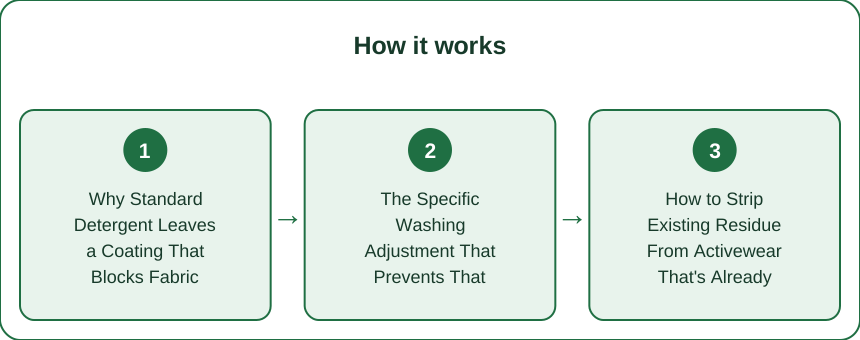
How to Strip Existing Residue From Activewear That’s Already Lost Its Wicking Ability
The stripping process: the wash-the-affected-items-in-hot-water-with-a-small-amount-of-detergent-and-a-cup-of-white-vinegar-instead-of-regular-detergent-alone (the a specific stripping wash designed to break down and remove existing residue rather than just adding another regular cycle — the hot-water-vinegar-stripping-wash), the the-skip-the-dryer-and-air-dry-after-a-stripping-wash-to-avoid-re-depositing-any-remaining-residue-through-heat (the avoiding a step that could set remaining residue back into the fabric — the air-dry-after-stripping-avoid-heat-redeposit), the the-test-wicking-performance-after-one-stripping-wash-before-assuming-multiple-repeat-washes-are-needed (the checking the actual result before committing to a repeated stripping process — the test-after-one-wash-before-repeating), and the frame (a hot water and white vinegar stripping wash, air drying afterward to avoid resetting residue, and testing performance after just one wash before repeating — a process that can restore wicking ability without replacing the garment).
Activewear that used to feel breathable but now feels clammy and slow to dry usually hasn’t degraded from wear — it’s often coated in a thin, accumulated layer of detergent and fabric softener residue that physically fills in the microscopic channels moisture-wicking fabric relies on to pull sweat away from skin, building up gradually over dozens of regular wash cycles rather than from any single wash. Prevent it going forward by never using fabric softener on wicking fabric since its entire purpose works against that mechanism, using a reduced amount of regular detergent specifically for activewear loads, and running an extra rinse cycle to clear out more residue than a standard single rinse. To restore activewear that’s already lost its wicking ability, wash it in hot water with a small amount of detergent plus a cup of white vinegar instead of regular detergent alone, skip the dryer and air dry afterward to avoid resetting any remaining residue back into the fabric, and test wicking performance after just one stripping wash before assuming repeat washes are needed.
Keep Reading
This article is for general informational and styling purposes only. Fit, sizing, and product availability may vary.