Sunscreen Stains on Activewear: Remove the Grease, Beat the Yellow
Quick Answer: Sunscreen leaves two completely different stains, and they need opposite treatments. White, greasy smears are mineral filters (zinc, titanium) plus oils — treat like a grease stain: blot, dish soap, cold-to-warm wash, no dryer until gone. Yellow-orange patches that appear after washing are avobenzone reacting with iron in hard water — a rust-type stain that chlorine bleach makes permanently worse. Prevention beats both: let sunscreen absorb fully before dressing, wash sunscreen-contact gear promptly in cold, and keep whites away from avobenzone formulas on hard-water systems.
One stain is butter. The other is rust. Stop treating them with the same bottle.

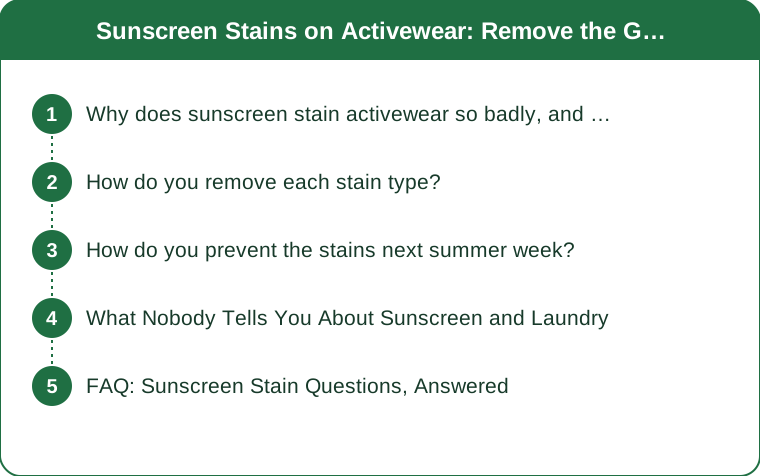
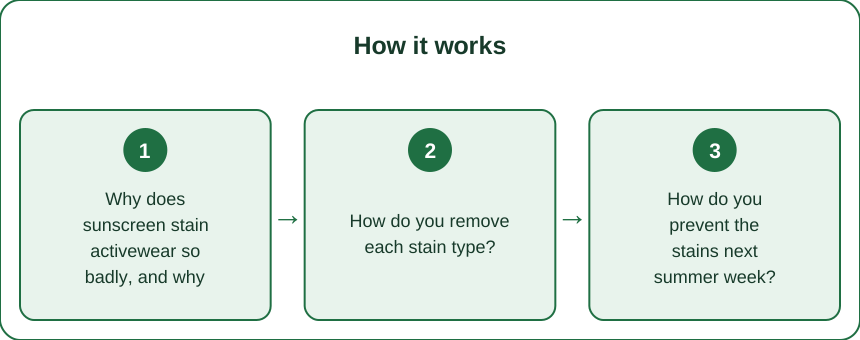
Why does sunscreen stain activewear so badly, and why two different ways?
Because sunscreen is an oil delivery system carrying two kinds of chemistry, and synthetics adore oil.
Stain one: the greasy white smear. Mineral sunscreens carry zinc oxide or titanium dioxide — white pigments — in an oil base. Wiped onto a waistband edge, a collar, or a sports bra band, they behave like tinted butter. Polyester and nylon are oil-loving fibers, which is why the same smear that rinses off cotton bonds enthusiastically to your favorite training tank. Elastane-rich fabrics hold oils tighter still.
Stain two: the yellow-orange ghost. Avobenzone — the workhorse UVA filter in a huge share of chemical sunscreens — reacts with iron and other minerals in hard water to form a rust-colored compound. This is why the stain so often appears only after washing: the shirt went into the machine looking fine and came out with orange patches at the neckline and underarms. It is functionally a rust stain, created in your own washer.
Heat is the accomplice to both. A hot wash or a trip through the dryer sets oil stains into synthetics semi-permanently and deepens the yellow reaction. The dryer is where recoverable stains go to become permanent.
Activewear takes the worst of it structurally: sunscreen concentrates exactly where fabric meets skin under pressure — straps, bands, collars, waistbands of leggings — and gets milled in by sweat and motion for hours before the wash. Add hard water at home and a habit of hot drying, and one beach-run summer can ghost an entire drawer of light-colored gear.
How do you remove each stain type?
Diagnose first — grease method for white smears, rust method for yellow. Crossing them wastes the garment.
For greasy white mineral smears:
Scrape and blot first. Lift what sits on the surface with a spoon edge or card; do not rub it deeper.
Degrease with dish soap. A drop of plain dishwashing liquid worked gently into the stain with fingers or a soft brush, left 10 to 15 minutes — dish soap exists to break oil, and it is the single best first move on any sunscreen smear.
Rinse, then wash cold to warm — within elastane-safe limits, cooler is safer — with your normal detergent. Check before drying. Repeat the cycle if a shadow remains; two gentle passes beat one hot one.
Stubborn set-in grease: a specialist stain remover made for oils, or a soak in warm water with an enzyme detergent, then re-wash. Patience outperforms aggression on synthetics.
For yellow avobenzone-and-iron stains:
Never chlorine bleach. Bleach plus the iron compound darkens and locks the stain — the classic way a light stain becomes a ruined shirt.
Use a rust-stain remover — the oxalic-acid products sold for iron marks — tested first on a hidden seam, since acids and elastane need care: apply, keep it brief, rinse thoroughly, then wash cold.
A gentler first try: a paste of oxygen-based (non-chlorine) whitener and cool water, or a long lemon-juice-and-cold-water soak for delicates, followed by a cold wash. Slower, kinder, often sufficient on fresh yellowing.
Either type: air dry until the stain is fully gone. The dryer is the point of no return, and skipping it also happens to be exactly what your elastane wanted anyway.

How do you prevent the stains next summer week?
Change the timeline and the water, not the sunscreen habit. Protection stays; ghosts go.
Let sunscreen absorb before fabric touches it. Ten to fifteen minutes between applying and dressing lets the formula set into skin instead of transferring to your sports bra band and collar. This one habit prevents the majority of all sunscreen staining — and conveniently matches the absorption time sunscreen wants for full protection anyway.
Apply with clean logic: face and neck before the top goes on; arms and legs after dressing, aimed away from hems and waistbands. Wash your palms before handling light-colored gear.
Wash sunscreen-contact gear promptly and cold. Sunscreen left in fabric for days keeps bonding and keeps reacting. The end-of-beach-day rinse — even a plain cold hand rinse at the sink — dramatically lowers what the real wash has to fight.
Know your water. If your kettle scales up and your fixtures spot, you have the hard water that turns avobenzone yellow. Options that work: a laundry water-softening additive in sunscreen-season loads, slightly more detergent, or simply pairing whites with mineral sunscreens.
Match formula to wardrobe on heavy days. For long outdoor sessions in light-colored kit, a mineral sunscreen sidesteps the yellow reaction entirely — its white smears are the removable kind of problem. Save the avobenzone formulas for dark gear days if your water runs hard.
Designate the sacrificial layer. Every summer wardrobe benefits from one older tank and one dark tee as sunscreen-day defaults, keeping the newest whites off the front line.
And keep the dryer out of summer entirely. Air-drying preserves elastane, prevents heat-setting whatever the wash missed, and in August it is faster than the machine anyway.
What Nobody Tells You About Sunscreen and Laundry
The stain that appears only after washing is not your detergent’s fault. The avobenzone-iron reaction happens in the machine, so the wash gets blamed for a stain it merely developed like film. Softening the water or switching filters fixes what switching detergents never will.
Underarm yellow on summer shirts is often sunscreen, not sweat. The classic yellow pit stain gets blamed on perspiration and antiperspirant, but on activewear worn with SPF, the same avobenzone chemistry is frequently the real author — which is why the stain laughs at deodorant-stain tricks.
White residue lines on dark leggings are the mirror-image problem. Mineral formulas leave pale smears on dark fabric that look like detergent failure. They are grease — the dish-soap routine erases them.
Fabric softener makes everything stickier. Softener coats synthetic fibers with a waxy film that traps oils and kills wicking. Sunscreen season is exactly when the softener bottle should be furthest from the machine.
Sunscreen in fabric can weaken elastane over a season. The oils degrade stretch fibers slowly — one more reason prompt cold washing is gear-preservation, not just stain control.
The stain follows the reapplication schedule. Long outdoor days mean midday reapplication over sweat, which transfers more generously than the morning coat. The sacrificial-layer strategy earns its keep on precisely those days.
FAQ: Sunscreen Stain Questions, Answered
Are yellow sunscreen stains permanent?
Usually not, if they never meet chlorine bleach or a hot dryer. Rust-type removers or an oxygen-based soak clear most avobenzone staining within one or two treatments. Bleached or heat-set versions are much harder, sometimes permanent.
Why does my white gear stain when my friend’s never does?
Water hardness is the hidden variable — the yellow reaction needs mineral iron, so soft-water homes barely see it. Formula choice matters too: her mineral SPF cannot produce the reaction your avobenzone formula can.
Can I just use more detergent to get sunscreen out?
More detergent helps the oil portion slightly, but the real levers are a dish-soap pretreat for grease, a rust remover for yellow, cold washes, and no dryer until clear. Doubling detergent without those mostly makes residue.
Does sunscreen stain dark activewear too?
Yes — as pale greasy smears from mineral formulas rather than yellow patches. They are the easier stain: dish soap, cold wash, done. The avobenzone yellow that plagues whites is usually invisible on dark colors.
TL;DR:
- Sunscreen makes two unrelated stains: greasy white mineral smears, and yellow avobenzone-plus-iron marks that develop in hard-water washes.
- Grease gets dish soap and cold washes; yellow gets rust-type removers — and chlorine bleach makes yellow permanent.
- No dryer until a stain is fully gone; heat is what converts recoverable into ruined.
- Prevent: 10 to 15 minutes between SPF and dressing, prompt cold washes, softened water or mineral formulas for white kit.
Check your shower head for scale tonight — if it is crusty, your washer has the iron, and your white tanks finally have their explanation.
See It in Motion
Seen here: Crewneck Short Sleeve Workout T-Shirt — shop it on bubblelime.com
Keep Reading
This article is for general informational and styling purposes only. Fit, sizing, and product availability may vary.