The Gym Bag Mistake That Makes Activewear Smell Permanently
Quick Answer: Permanent activewear odor is built in the gym bag, not the washing machine. Synthetic fibers hold body oils, and a warm sealed bag gives odor-causing bacteria an ideal environment for hours, letting them colonize deep inside the fiber where surface washing cannot reach. The fix has two parts: never leave damp gear zipped up for more than about an hour, and rescue already-affected pieces with a 30-minute soak in a 1:4 white vinegar to cold water solution before a normal wash, repeated over a few cycles.
You wash it, it comes out smelling fine, and then twenty minutes into your next workout the smell returns like it never left. That is not a detergent problem.
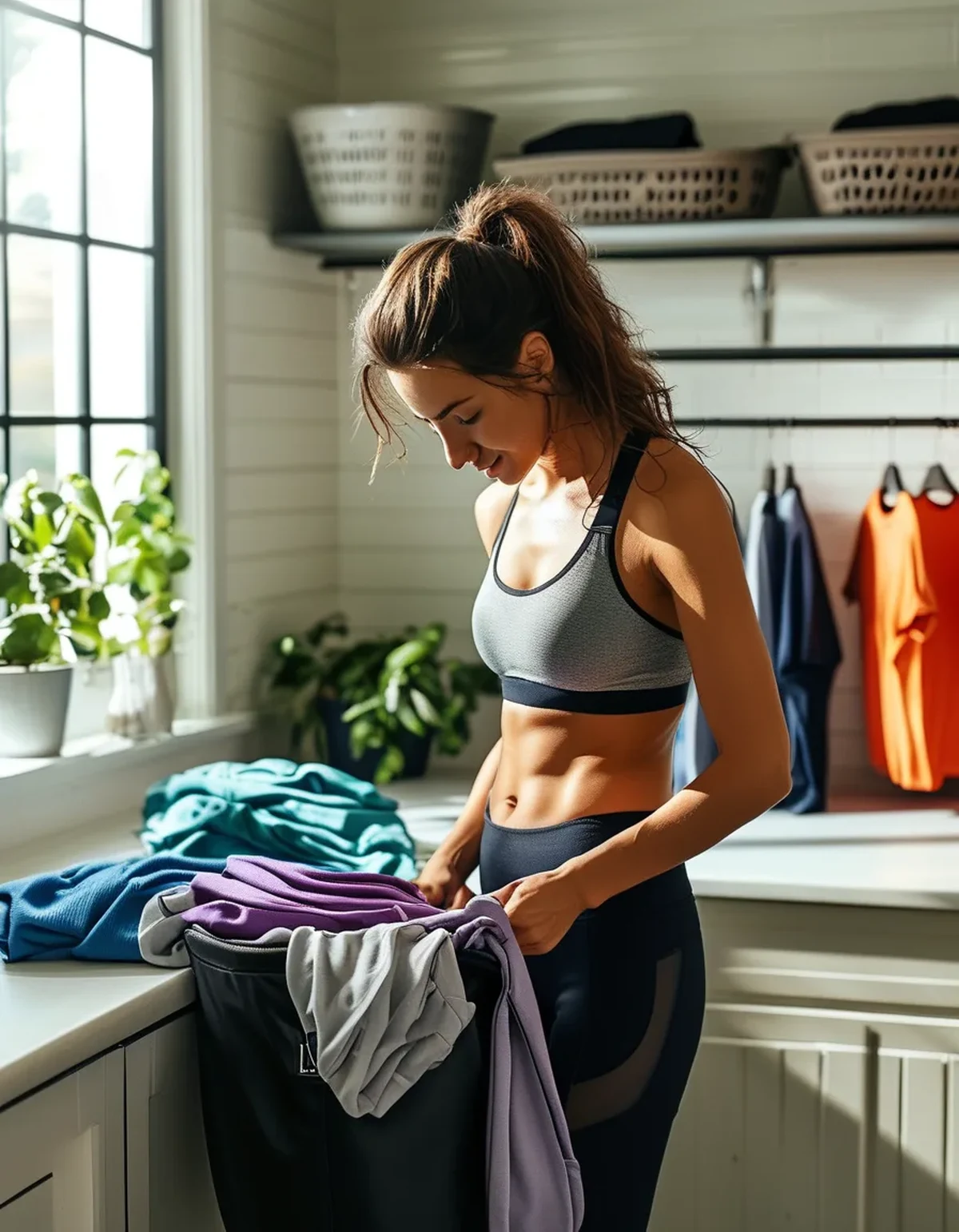
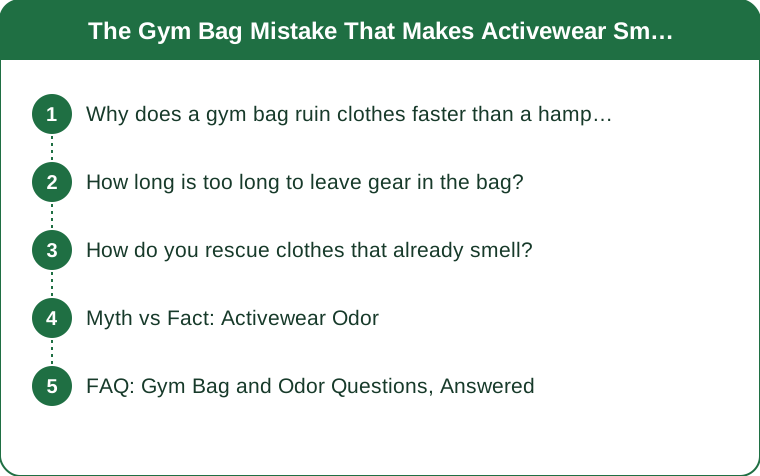
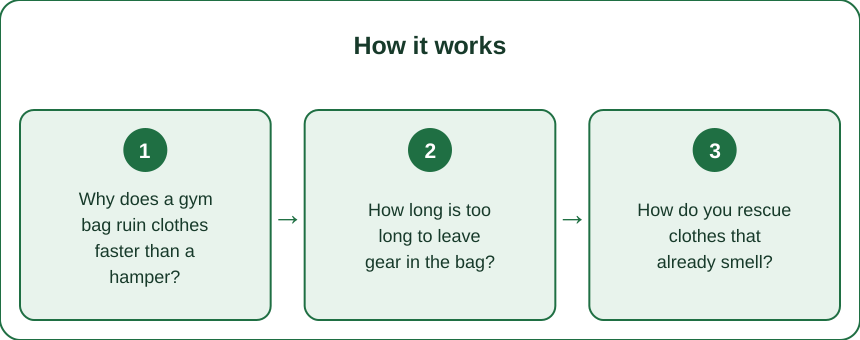
Why does a gym bag ruin clothes faster than a hamper?
Two variables: temperature and airflow. A hamper is open, so moisture evaporates and the fabric cools. A zipped duffel does the opposite — it holds body heat from the clothes themselves and traps every bit of moisture inside.
That gives you a warm, humid, dark, oxygen-limited environment sitting between roughly 80 and 95°F for however long the bag stays in your car or by the door. Bacteria that were harmlessly present on your skin get an ideal growth window, and populations expand dramatically over a few hours.
Here is the part that makes it permanent: as they multiply, they work into the interior of synthetic fibers. Polyester and nylon are oleophilic, meaning they bond with oils, and those oils are both the food source and the shelter. Once bacteria are living inside that oil layer rather than on the fabric surface, a normal 30-minute cold wash never reaches them.
A car trunk in August makes it dramatically worse. The bag can sit above 100°F all afternoon.
How long is too long to leave gear in the bag?
The practical threshold is about one hour. Under that, you are mostly fine. Past three or four hours, damage starts accumulating, and overnight is where pieces get genuinely ruined.
The realistic version of this rule, for people who do not go straight home:
Unzip the bag. Even leaving it open in the car cuts humidity substantially and costs nothing.
Carry a mesh bag inside the duffel and put damp gear in that. Airflow is the entire point, and mesh gives it back.
Hang the worst offender. Sports bras and leggings hold the most oil because they sit tightest against skin. If you only rescue one item from the bag, make it those.
If you genuinely cannot deal with it until evening, rinse the gear in cold water at the gym and wring it out. Counterintuitive, but rinsing removes the oil and salt that feed the problem, and wet-but-clean beats damp-and-oily by a wide margin.
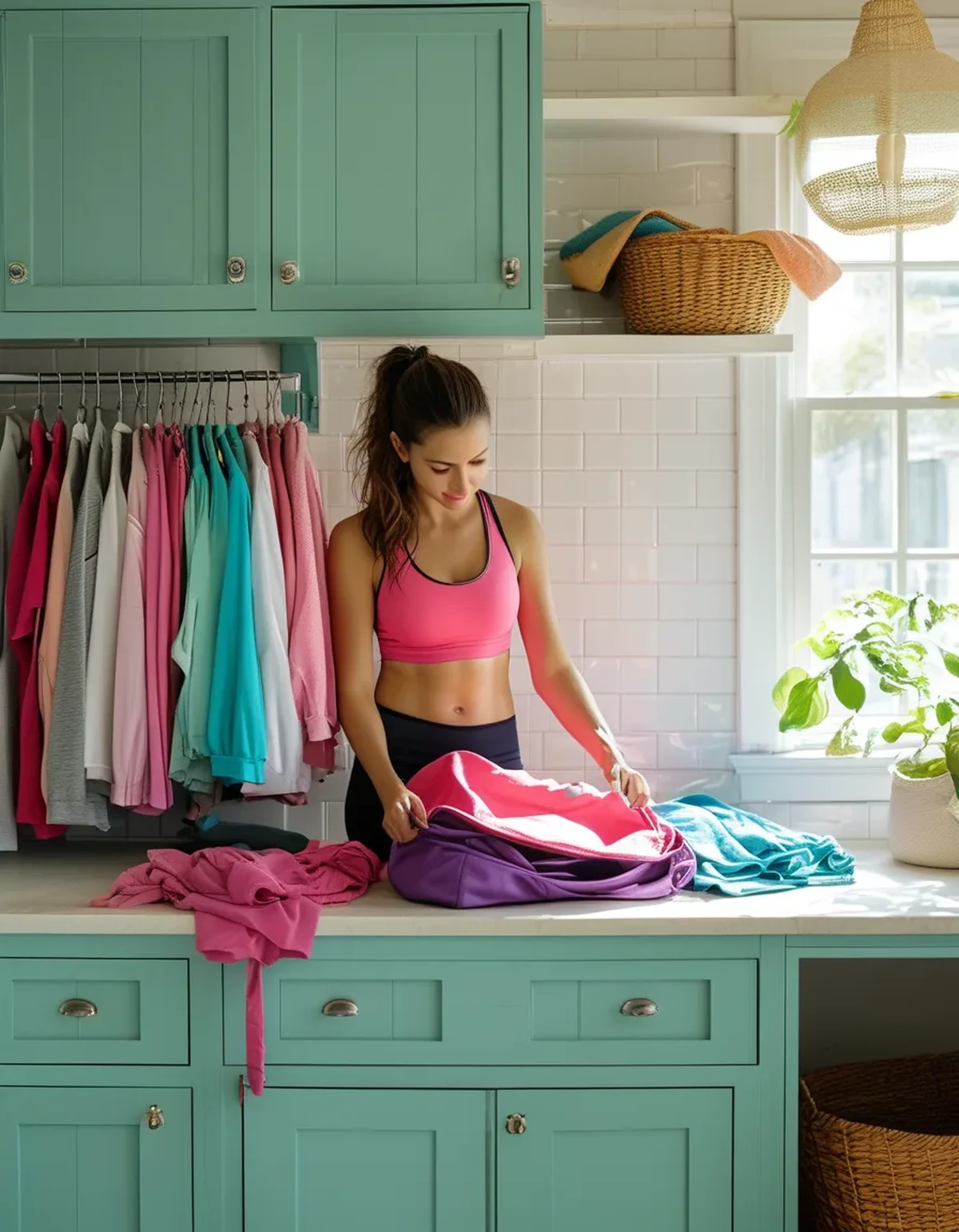
How do you rescue clothes that already smell?
One wash will not do it. You are removing an oil layer that has been building for weeks.
Step 1 — Vinegar soak. Mix one part white vinegar to four parts cold water in a basin, submerge the affected pieces, and leave for 30 minutes. Vinegar breaks down mineral and oil residue and shifts the pH away from what odor bacteria prefer. Do not use hot water, which sets odor into synthetics.
Step 2 — Wash cold with half the detergent you normally use. Excess detergent is the second half of this problem: it does not fully rinse from technical fabrics and leaves a residue that traps more oil.
Step 3 — Air dry completely, ideally in sunlight. UV is a genuine bacterial reducer, and heat from a dryer bakes remaining odor compounds in.
Step 4 — Repeat over three or four wash cycles. Deep-set odor comes out in layers. Most people give up after one soak and conclude the garment is dead when it was two-thirds of the way back.
Skip fabric softener entirely. It coats fibers and makes everything worse.
Myth vs Fact: Activewear Odor
Myth: Hot water kills the bacteria, so wash hot. Fact: Hot water damages elastane and can permanently set odor compounds into polyester. Cold water plus a vinegar pre-soak outperforms hot on synthetics.
Myth: More detergent means cleaner clothes. Fact: Technical fabrics rinse poorly. Excess detergent builds a residue layer that holds oil and reduces wicking, which is why over-washed gear both smells worse and performs worse.
Myth: Antimicrobial-treated gear does not need this. Fact: Silver and other antimicrobial finishes wear off over roughly 30 to 50 washes and were never a substitute for airflow.
Myth: Baking soda and vinegar together are extra powerful. Fact: They neutralize each other. Use one or the other in a given step, not both at once.
Myth: If it smells clean out of the wash, it is clean. Fact: The tell is what happens when the fabric warms up and gets damp again. Body heat reactivates residual bacteria, which is why the smell reappears mid-workout.
FAQ: Gym Bag and Odor Questions, Answered
Does the bag itself need cleaning?
Yes, and almost nobody does it. The bag lining holds the same oils and bacteria and reinfects clean gear. Most nylon duffels can be washed cold on a gentle cycle in a pillowcase, then air dried fully. Do this monthly during summer.
Can I just use an odor-eliminating sports detergent?
Sports detergents are genuinely better at cutting body oil than standard ones, and they help. They still work best combined with the vinegar soak for pieces that are already affected, and they cannot compensate for gear that sits damp for eight hours.
Is it worth saving a badly affected sports bra?
Usually yes, if the elastic is still good. Bras hold the most oil and respond well to repeated soaks. If the band has lost stretch, that is a separate end-of-life issue and no amount of washing fixes it.
Does air drying really matter that much?
A lot. Dryer heat sets remaining odor compounds and shortens the life of elastane. Air drying takes a few hours and adds months to the garment.
TL;DR:
- The damage happens in the bag, not the wash — warm, sealed, humid conditions let bacteria colonize inside the fiber.
- Keep damp gear zipped up for no more than about an hour; unzip the bag or use a mesh liner otherwise.
- Rescue affected pieces with a 30-minute 1:4 vinegar-to-cold-water soak, then wash cold with half the usual detergent.
- Air dry in sunlight, never a hot dryer, and repeat the whole cycle three or four times.
- Wash the bag itself monthly, and skip fabric softener permanently.
Most people replace gear that was completely salvageable. Change the hour after your workout rather than the detergent, and the pieces you already own last a lot longer than they have been.
See It in Motion
Seen here: UPF 50+ Racerback Yoga Tank Top — shop it on bubblelime.com
Keep Reading
This article is for general informational and styling purposes only. Fit, sizing, and product availability may vary.