Why Activewear Smells Worse Once You Start Drying It Indoors
Quick Answer: Indoor drying takes far longer than outdoor drying, and fabric that stays damp for more than about 8 hours grows bacteria that produce odour - so the kit smells despite being freshly washed. Synthetics hold body oils that feed this. Fix it by spinning at the highest safe speed, spacing garments so air moves between them, using a fan or open window rather than heat alone, and drying within 4 to 6 hours. For kit that already smells, a soak in a 1:4 white vinegar solution usually resets it.
Here is the mechanism and the full routine.
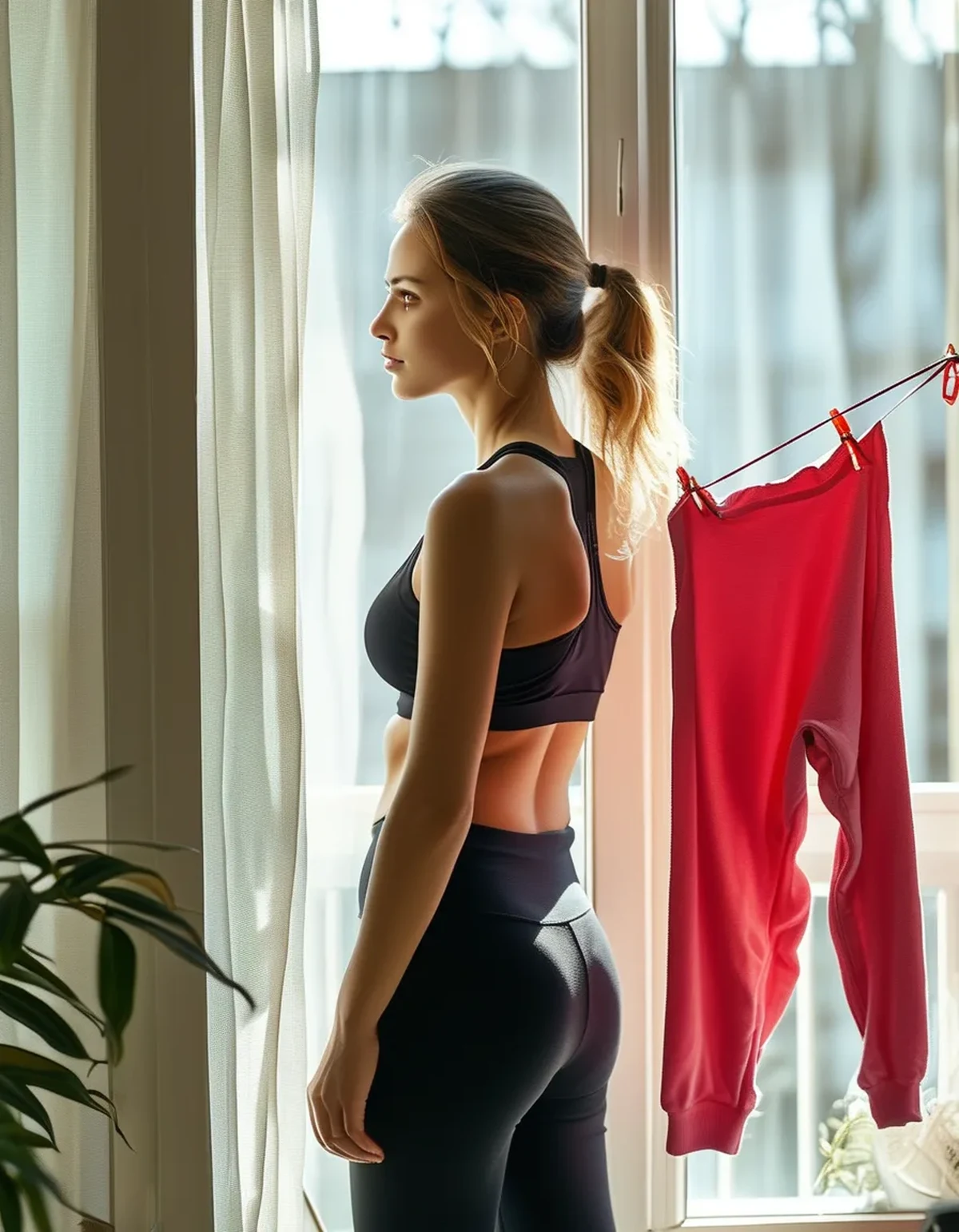
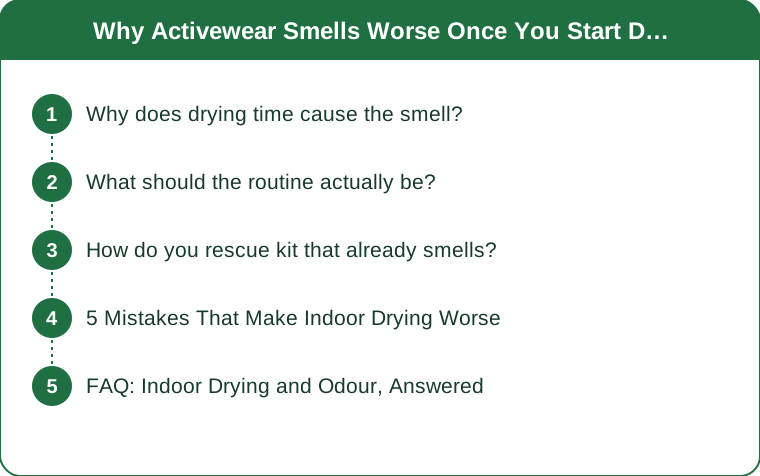
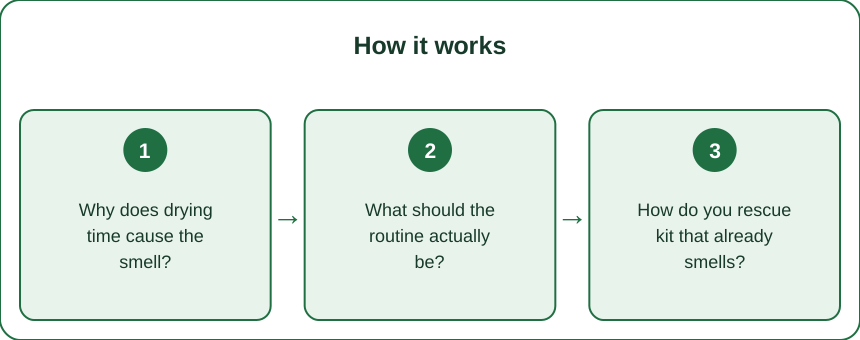
Why does drying time cause the smell?
Bacteria need moisture, warmth, and food, and slow indoor drying provides all three. A garment that stays damp for 8 hours or more in a warm room is close to an incubator.
Synthetics hold the food source. Polyester and nylon are oleophilic - they attract and retain body oils - and those oils remain in the fabric after a normal wash, feeding bacteria as the garment dries.
Outdoor drying was solving this invisibly. Moving air removes moisture quickly, and sunlight adds a mild antibacterial effect, so the whole problem never appeared while the rack was outside.
Indoor rooms are humid, which slows everything further. Drying laundry indoors raises the humidity of the room it is in, which then slows the drying of everything on the rack - a self-reinforcing loop.
Overcrowding the airer is the biggest practical error. Garments touching each other have no airflow between them, and the contact points stay damp longest.
And radiator drying is worse than it looks. Direct heat dries the outer face while the inside stays damp, and warmth plus moisture is the exact condition bacteria want.
What should the routine actually be?
Spin at the highest speed the fabric allows. Most activewear tolerates 1,200 rpm, and going from 800 to 1,200 removes considerably more water - which is the single most effective change for indoor drying.
Space garments so nothing touches. Airflow between items roughly halves the drying time compared with a crowded rack.
Use a fan rather than more heat. A small fan on the airer is far more effective than a radiator, because moving air removes the humid boundary layer at the fabric surface.
Open a window, even a little, even when cold. Ventilation removes the humidity you are generating, and 10 minutes of cross-ventilation does more than an hour of a closed warm room.
Dry within 4 to 6 hours. That is the practical target. Beyond 8 hours the odour risk rises sharply, so if the kit is still damp overnight, something in the setup needs to change.
Turn thick items inside out and rotate them halfway. Waistbands, seams, and padded areas are the last to dry and the places odour starts.
And do not leave the washing in the machine. Even an hour in a warm drum starts the process, and overnight is guaranteed to produce it.
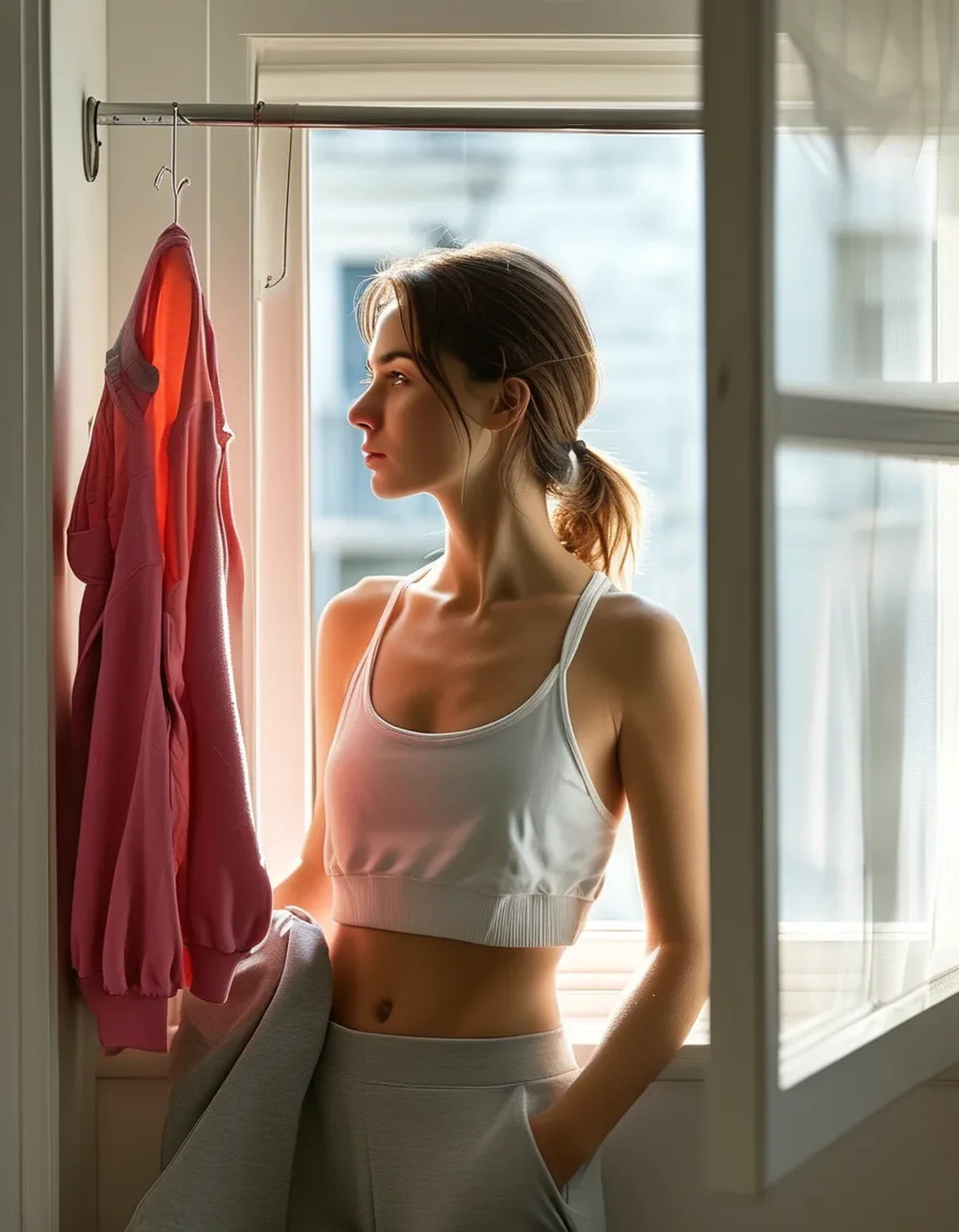
How do you rescue kit that already smells?
Soak in 1 part white vinegar to 4 parts cold water for 30 minutes, then wash normally. This breaks down the residue holding the odour, and it works on most synthetic kit.
Or use an enzymatic sports detergent, which is formulated to remove body oils that ordinary detergent leaves behind.
Stop using fabric softener entirely. It coats fibres with a residue that traps oils and bacteria, and on activewear it also reduces wicking. This is the most common hidden cause of persistent odour.
Use less detergent, not more. Excess detergent does not rinse out fully and leaves residue that holds odour - the instinct to add more makes it worse.
Run an empty hot cycle on the machine monthly. Machines that only ever run cold develop a biofilm in the drum and seal, which then transfers to every load.
Wash activewear separately from towels and cotton. Lint from cotton embeds in synthetic fabric and holds moisture and odour.
And wash it promptly. Damp kit left in a bag for a day is where most odour originates, before the machine ever sees it. Hang it to air until washing day if you cannot wash immediately.
5 Mistakes That Make Indoor Drying Worse
1. Crowding the airer. Garments touching each other have no airflow between them, and the contact points stay damp longest. Space them properly and drying time roughly halves.
2. Drying on radiators. Direct heat dries the outer surface while the inside stays wet, producing the warm-and-damp combination bacteria thrive in.
3. Using fabric softener. It leaves a residue that traps oils and bacteria and reduces wicking. Skip it entirely on activewear.
4. Drying in a closed room. Laundry raises humidity, which slows the drying of everything else on the rack. Open a window or run a fan.
5. Leaving washing in the machine. An hour in a warm drum starts the process; overnight guarantees it, and no amount of careful drying afterwards recovers it.
The common thread is airflow. Almost every fix on this list is a variation on moving air past damp fabric faster. A fan and a slightly open window solve more than any product does, and both are nearly free.
FAQ: Indoor Drying and Odour, Answered
Why does my activewear smell after indoor drying?
Because slow drying keeps fabric damp long enough for bacteria to grow. Synthetics also retain body oils that feed them, so the odour develops during drying rather than during wear.
How fast should activewear dry?
Within 4 to 6 hours. Beyond about 8 hours the odour risk rises sharply, so if things are still damp overnight the setup needs changing.
What is the single best change?
Spin at the highest safe speed - typically 1,200 rpm for most activewear. Removing more water in the machine shortens indoor drying more than anything you do afterwards.
Is a fan better than a heater?
Yes. Moving air removes the humid layer at the fabric surface, whereas direct heat dries the outside while the inside stays damp.
How do I fix kit that already smells?
Soak for 30 minutes in 1 part white vinegar to 4 parts cold water, then wash normally. An enzymatic sports detergent is a good alternative.
Does fabric softener cause it?
It contributes significantly. Softener coats fibres with residue that traps oils and bacteria, and it reduces wicking. Skip it on activewear entirely.
Should I use more detergent for smelly kit?
No - use less. Excess detergent does not rinse out fully and the residue holds odour, so adding more makes the problem worse.
TL;DR:
- Odour develops during slow drying, not during wear. Damp beyond 8 hours is the threshold.
- Spin at 1,200 rpm where the fabric allows - the highest-value single change.
- Space garments so nothing touches. Airflow between items roughly halves drying time.
- A fan beats a radiator. Direct heat dries the outside and leaves the inside damp.
- Open a window - indoor drying raises humidity, which slows everything on the rack.
- Never use fabric softener on activewear, and use less detergent, not more.
- Rescue smelly kit with a 30 minute soak at 1 part vinegar to 4 parts water.
Target 4 to 6 hours to dry. Every fix on this list is really a way of moving air past damp fabric faster.
Keep Reading
This article is for general informational and styling purposes only. Fit, sizing, and product availability may vary.